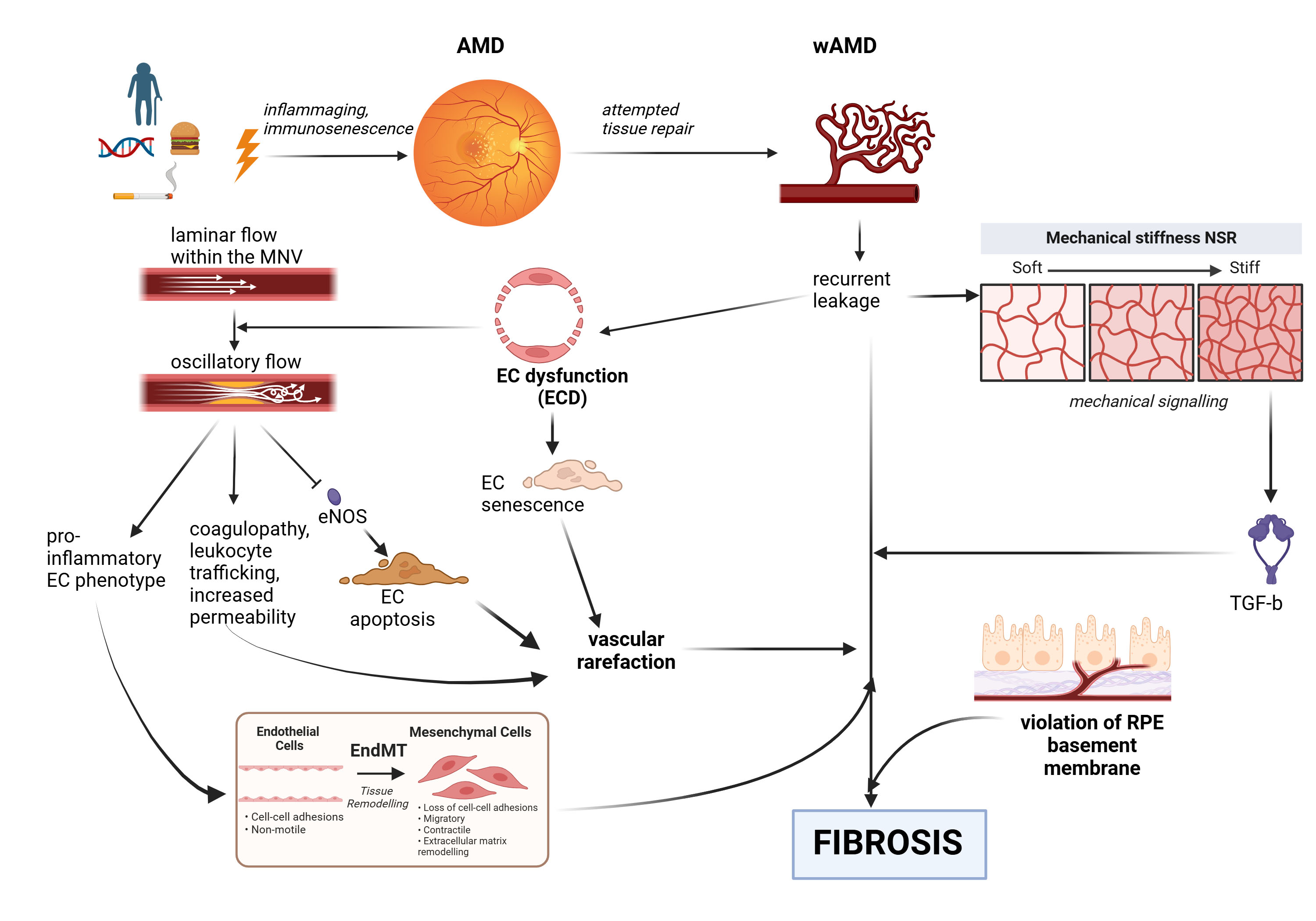
Figure 1. Endothelial cell-mediated pathway leading to fibrosis in neovascular age-related macular degeneration (nAMD). A combination
of factors, including aging, lifestyle, and genetic predisposition, causes an injury that leads to AMD. In some cases, a reparative
attempt, which includes the generation of new vessels that penetrate the retinal pigment epithelium/Bruch’s membrane complex
(choroidal neovascularization [CNV]), is initiated. Abnormal vascular permeability induces abnormal blood flow (oscillatory
instead of laminar flow), resulting in oscillatory shear stress that has several consequences [
1]: a change in the stiffness of the extracellular matrix of the neurosensory retina (NSR), which leads to a mechanical signaling
that includes liberation of cryptic transforming growth factor β (TGF-β), a profibrotic growth factor [
2], and inactivation of endothelial nitric oxide synthase (eNOS) that generates endothelial cell dysfunction (ECD), leading
to fibrosis through several pathways, including a proinflammatory EC phenotype, increased generation of oxidants in the presence
of decreased antioxidants, coagulopathy, increased leukocyte trafficking, EC senescence (producing a senescence-associated
secretary phenotype [SASP]), apoptosis and endothelial to mesenchymal transition (EndMT), and ultimately fibrosis and vascular
rarefaction. Created in
BioRender. Garcia Armendariz, B. (2025).
 Figure 1 of
Armendariz, Mol Vis 2026; 32:22-32.
Figure 1 of
Armendariz, Mol Vis 2026; 32:22-32.