Figure 6. Mechanisms of proteostasis dysregulation and pathogenesis in pseudoexfoliation. Normal State: In a healthy cellular environment,
the ubiquitin proteasome system (UPS) and autophagy function in a coordinated manner to degrade misfolded or damaged proteins,
preventing their accumulation. The equilibrium between protein synthesis and degradation maintains proteostasis, ensuring
proper cellular function. Compromised State in PEX Pathogenesis: Under pathological conditions, such as PEX, impairments in
protein degradation pathways result in proteostasis dysregulation. Dysfunctional UPS and autophagy lead to the accumulation
of extracellular matrix (ECM) proteins and intracellular protein aggregates. This proteotoxic stress contributes to increased
oxidative damage, mitochondrial dysfunction, and cellular stress, ultimately driving PEX pathogenesis. Red arrows highlight
the points of dysregulation in the degradation pathways, leading to proteostasis imbalance. The tilted scale depicts the imbalance,
symbolizing the shift toward protein aggregation and ECM accumulation, hallmarks of PEX pathology.
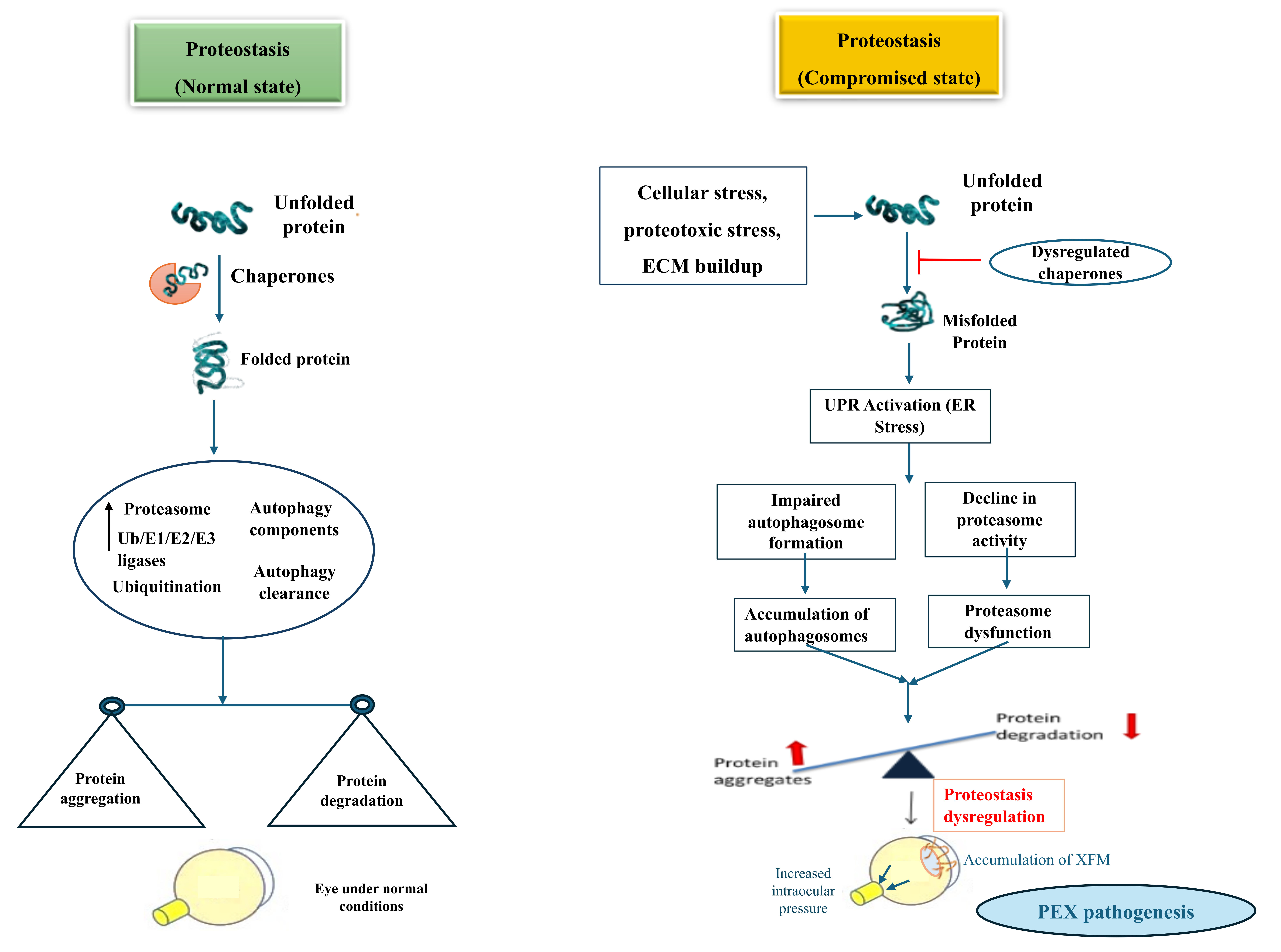
 Figure 6 of
Hayat, Mol Vis 2025; 31:463-484.
Figure 6 of
Hayat, Mol Vis 2025; 31:463-484.