Figure 2. R9-SOCS3-KIR prevented the loss of tight junction proteins and transepithelial electrical resistance (TEER) caused by C5a
and TNFα. The ARPE-19 cells were grown in 24-well Transwell plates for four weeks in low serum until they attained a cobblestone
morphology. They were pre-treated with R9-SOCS3-KIR or its control peptide (both at 20 μM) for 2 h, followed by treatment
with (A) C5a (50 ng/ml) or (B) TNFα (10 ng/ml) for 48 h. The cells were permeabilized and treated with an antibody to ZO-1, incubated with a Cy3-conjugated
secondary antibody, washed, fixed, and imaged using a Keyence fluorescence microscope. Scale bar: 50 μm. The TEER was measured
in individual wells in triplicate using an EVOM2 voltohmmeter. C: TEER measurements in response to C5a ± R9-SOCS3-KIR. D: TEER measurements in response to TNFα ± R9-SOCS3-KIR. Abbrev: KIR-3, R9-SOCS3-KIR, Ctrl, scrambled R9-SOCS3-KIR peptide.
One-way ANOVA (ANOVA), followed by Tukey’s multiple comparisons, was used to test significance. *, p < 0.05; ***, p < 0.001,
****, p < 0.0001. Abbreviations: KIR-3, R9-SOCS3-KIR; Ctrl, scrambled R9-SOCS-3 KIR peptide.
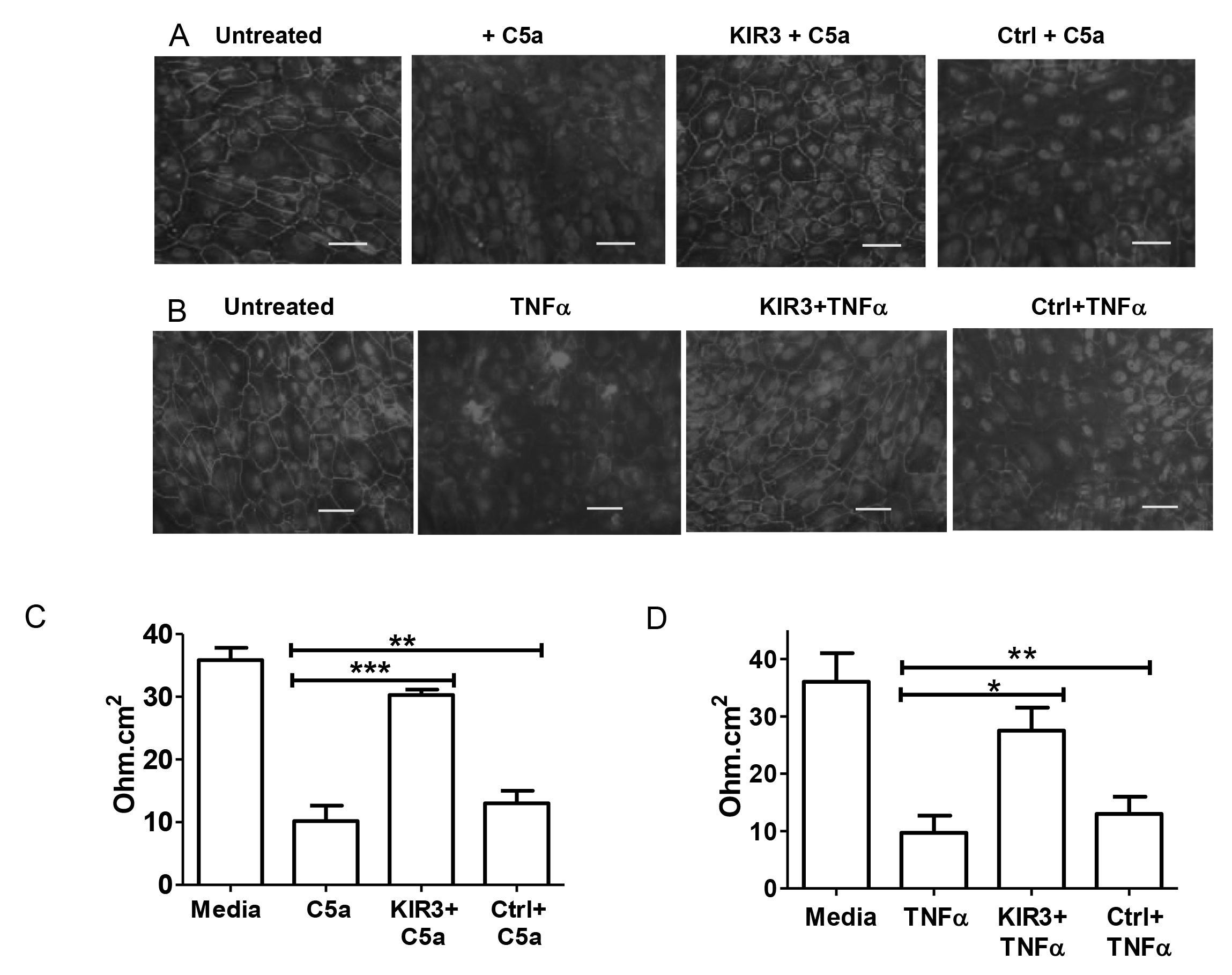
 Figure 2 of
Ahmed, Mol Vis 2023; 29:338-356.
Figure 2 of
Ahmed, Mol Vis 2023; 29:338-356.